Written by Olivia Routhier, BS and Ellen Shanley, MBA, RDN, CDN, FAND, Dietetics, Department of Allied Health Sciences, University of Connecticut
The Process
In the fall of 2025, students in the UConn Coordinated Dietetics Program discovered a novel sustainability initiative established between New London Public Schools (NLPS) and Secchiaroli Farm, a family-owned Connecticut piggery that has responsibly raised pigs since the early 1900’s. Through their supervised practice experience with Samantha Wilson, the Food Service Director for NLPS, students explored important aspects of food procurement and waste management, while gaining insight into a partnership that demonstrates environmental wellness and community collaboration.
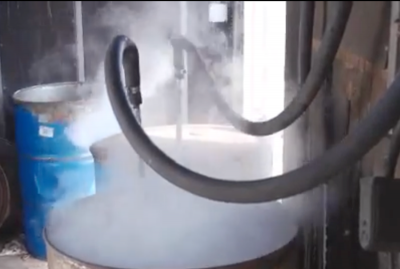
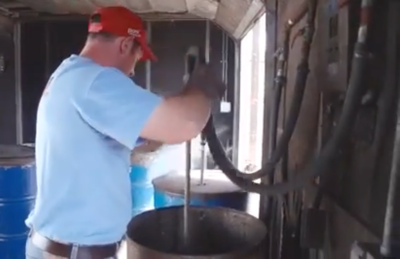
The food scrap recycling process takes place in all New London Public School kitchens and in the elementary school cafeterias. The district has three elementary schools that each have about 400 students, translating to approximately 1200 children from the New London community being involved. The students and staff in the schools that participate are educated on how to properly dispose of all waste so that no inedible items go into the food scrap recycling bin. The foods that are recycled are uneaten food items from students’ plates or scraps from food preparation including but not limited to bread, milk, fruit and vegetable peels, meat, pasta, etc. Essentially all foods that are uneaten or leftover can go into the food scrap recycling bins including meat and fats. These designated food scrap containers are collected on a weekly basis from the schools by employees of Secchiaroli Farm, usually by the owners John or Hazel Secchiaroli themselves.
Once transported to the farm, the scraps undergo a strict sterilization process. Using a large steam boiler, the food is heated to 212°F for 30 minutes to eliminate pathogens and ensure it is safe for animal consumption. After a cooling off period, the sterilized food is distributed to the pigs using farm equipment. This system represents a form of indirect composting. Food scraps are first converted into animal feed, and the resulting manure is later composted to create nutrient-rich soil additives. By taking advantage of this process, nutrients are returned to the land rather than lost in landfills, creating a regenerative cycle.
How does this embody sustainability?
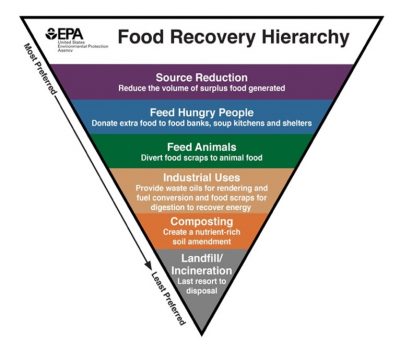
Secchiaroli Farm’s collaboration with NLPS demonstrates how local food systems can work together to reduce waste and support agricultural sustainability. Partnering with the school system allows the farm to feed their pigs human grade food while simultaneously reducing landfill waste. Diverting food scraps to animal feed is a part of the food recovery hierarchy that was developed by the Environmental Protection Agency (EPA), which can be viewed in Figure 2 (Food Recovery Hierarchy, 2016). Farms participating in this process must be licensed by the United States Department of Agriculture (USDA), ensuring that food scrap recycling is performed safely and in compliance with federal regulations. In fact, Secchiaroli Farm is one of three pig farms in the state of Connecticut who are licensed for this practice.
Food Scrap Recycling Licensing Process
Connecticut is among the 27 states in the United States that allow regulated swine garbage feeding. The state utilizes a cooperative enforcement approach for regulation of this type of feed. This method involves a blend of state and federal oversight, creating shared responsibility for monitoring and inspection. Under a cooperative agreement, the USDA’s Animal and Plant Health Inspection Service (APHIS) works directly with state agricultural agencies to regulate the garbage feed process. In some states, oversight is only performed by state officials, referred to as state enforcement.
To become licensed for swine garbage feeding in Connecticut, the owner of the farming facility must apply to the Area Veterinarian in Charge at APHIS. If they have more than one facility that they would like to perform food scrap recycling at, they must submit a separate application for each facility. Upon application, the applicant will be provided with a copy of the Act and regulations. The applicant signs a receipt at the pre-licensing inspection to confirm that they have read the Act and regulations, understand its contents, and will comply with the regulations. The last step of licensure includes an inspection to demonstrate that the facility and its equipment comply with the standards set forth in the regulations. Once all these conditions are met, the applicant will be issued a license. To maintain this license, the facility must go through routine inspections by state or APHIS officials to ensure continued safety of the swine and the feed. The extensiveness and intensity of this process was emphasized by John Secchiaroli in a virtual meeting, giving insight as to why there are very few pig farms in Connecticut who are licensed for this method of waste management. The exclusivity of utilizing food waste as animal feed makes this relationship between a local farm and a public school district especially remarkable.
Significance of this Partnership
The partnership with Secchiaroli Farm was initially proposed by the New London Board of Education after financial analyses determined that it could potentially save the district money in waste removal. Under Sam Wilson’s leadership, the district implemented and maintains the program, building a strong relationship with Secchiaroli Farm. The most interesting aspect of this partnership is that it occasionally comes full circle when Sam Wilson purchases pork from Secchiaroli Farm to serve in school meals. Through this partnership, the farm-to-school model is put into practice, reinforcing the values of sustainability, local sourcing, and community engagement.
For students enrolled in the Coordinated Dietetics Program, the partnership offers a real life example of how nutrition professionals play a key role in enhancing sustainability, strengthening local food networks, and shaping environmentally responsible food systems. This program has been successful for six years now, standing as a model for long-term, community-based solutions to food waste management and improved sustainability efforts.
Resources
The Electronic Code of Federal Regulations – Swine Health Protection